Kuwait Embassy Attestation: A Complete Step-by-Step Guide
11/28/20257 min read
Introduction to Embassy Attestation
Embassy attestation is a critical procedure for individuals and businesses looking to engage in various activities in Kuwait, such as employment, education, and trade. The term 'attestation' refers to the official verification of documents by a designated authority, in this case, the embassy of Kuwait. This process ensures that the documents presented are authentic and meet the legal standards required for recognition in Kuwait.
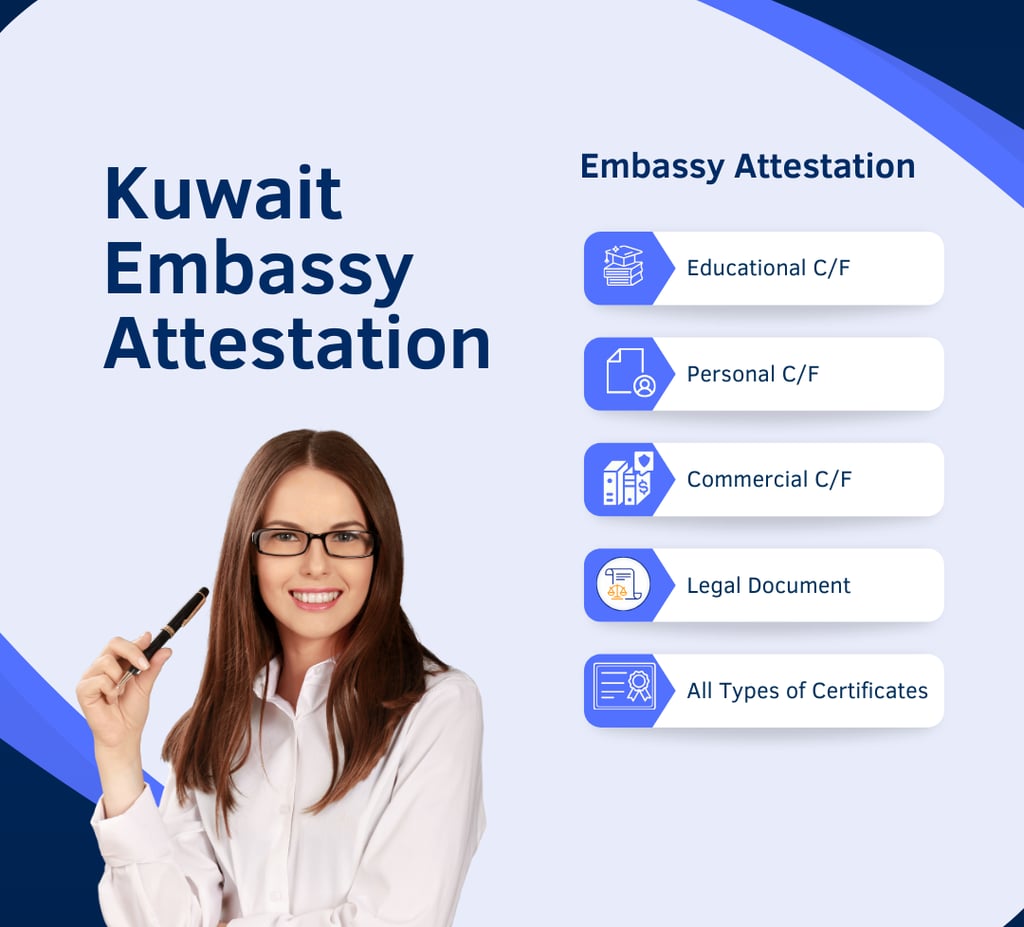
Typically, a wide array of documents may require embassy attestation, including but not limited to educational certificates, marriage licenses, birth certificates, and commercial documents. For individuals, educational documents are often the primary focus, particularly for those seeking employment or further studies in Kuwait. On the other hand, businesses may need to get their commercial documents and contracts attested to facilitate trade and establish legitimacy in the eyes of local authorities.
The purpose of attestation serves multiple functions. It bolsters the credibility of documents and gives assurance to authorities in Kuwait regarding their legitimacy. Furthermore, this process assists in preventing fraud and ensures compliance with Kuwait's legal and regulatory framework. Without proper attestation, essential documents may face rejection at various institutions or legal entities within the country.
As globalization continues to expand, the significance of embassy attestation has grown, particularly for expatriates and businesses operating internationally. Engaging in this process is not merely a bureaucratic formality; it can significantly impact access to services and opportunities in Kuwait. Overall, understanding the nuances of embassy attestation is invaluable for anyone intending to navigate legal and administrative procedures related to Kuwait effectively.
Understanding the Requirements for Attestation
Attestation is a crucial process for individuals seeking to validate their documents for various purposes, especially when dealing with foreign entities. The Kuwait Embassy requires specific documentation for the attestation process to ensure that all legal standards are met. A variety of documents may require such authentication, including educational certificates, marital status certificates, and business documents. Each category has its requirements and underlying reasons for verification.
Firstly, educational certificates, which include degrees and diplomas, are often required to ensure the authenticity of qualifications. These documents are typically needed for job applications or educational pursuits within Kuwait. Marital status certificates, such as marriage certificates or divorce decrees, are essential for individuals looking to sponsor a spouse or apply for residency based on family renunciation.
Business documents may also require attestation, particularly for those looking to establish a presence in Kuwait or engage in commercial activities. These can encompass partnership agreements, corporate bylaws, and financial statements, each needing confirmation to assure Kuwait's regulatory adherence.
Understanding the necessary fees associated with the attestation process is equally important. Fees can vary depending on the type of document and the urgency of the service required. Furthermore, individuals must present valid identification, such as passports or national ID cards, when submitting their documents to the embassy.
Prior to approaching the Kuwait Embassy, it is advisable to verify that all documents are correctly prepared and comply with the embassy's requirements. This includes ensuring the accurate completion of application forms, proper notarization, and the gathering of any additional documents that may be requested. Proper preparation can streamline the attestation process, ultimately saving time and reducing complications.
The Step-by-Step Process of Attestation
Attestation is a critical procedure that establishes the authenticity of documents required for various purposes, especially for international use, such as legal and educational functions. Understanding the step-by-step process of attestation can alleviate confusion and ensure a smoother experience. The first step involves preparing the required documents. It is essential to gather all necessary papers that need attestation, including educational certificates, marriage certificates, and commercial documents. Organizing these documents effectively will save time and hassle.
Once the documents are in order, the next step is to fill out the relevant forms. This may involve filling out an application form provided by the attesting authority or the Kuwait Embassy. Be sure to double-check all information entered, as inconsistencies can lead to delays. After filling out the forms, the documents must be submitted to the appropriate authorities. This usually includes an initial submission to local authorities such as the Ministry of Foreign Affairs or a designated notary public, depending on the nature of the documents and the specific requirements of the Kuwait Embassy.
After submission, it is important to keep track of the processing status. Processing times can vary based on the document type and embassy workload, so it is wise to allow sufficient time for attestation. Following up regularly can help you stay informed and address any potential issues that may arise. Finally, once the documents are duly attested, they will be ready for collection. Upon receiving the attested papers, always verify that the documents are properly stamped and signed, ensuring that they meet all specified requirements for use in Kuwait.
Throughout the attestation process, it is crucial to be meticulous, as attention to detail can help avoid many common pitfalls, such as incomplete submissions or incorrect form filling. By following these steps carefully, the attestation process can be simplified, leading to successful document verification.
Document Preparation: What You Need to Know
Preparing documents for Kuwait embassy attestation is a critical step that ensures the authenticity and acceptance of your documents in Kuwait. The foremost requirement is to ensure that all documents are correctly formatted. This includes adhering to any size, typeface, and margin specifications required by the embassy. Commonly accepted formats are PDF or JPEG, but it is advisable to check the embassy's specific requirements, as they may vary.
In many cases, notarization of documents may be necessary. Notarizing involves having a legal professional validate the identities of the signatories and the legitimacy of the document itself. This is particularly crucial for sensitive documents such as educational certificates or legal agreements, as it adds a layer of credibility to your submissions. Make sure to arrange for notarization well in advance, as it can take time to coordinate with a notary public.
Another important aspect of document preparation is ensuring that all information is accurate and complete. This involves double-checking names, dates, and any referenced supporting documents. Common mistakes often include submitting documents that are incomplete or contain errors. Such oversights can lead to unnecessary delays in the attestation process.
When preparing your documents, it's also wise to maintain copies of everything you submit. This will help you keep track of what has been sent and will be useful for follow-up communications with the embassy. Additionally, consider using a checklist to ensure that you have all necessary documents prepared and self-attested when required.
By taking the time to thoroughly prepare your documents and understanding the requirements for attestation at the Kuwait embassy, you can streamline the process and avoid common pitfalls that could lead to delays.
How to Submit Your Documents to the Embassy
Submitting documents to the Kuwait Embassy is an essential step in the process of attestation. Understanding the available methods of submission ensures that your documents are processed efficiently and correctly. There are primarily two methods for submitting your documents: in-person visits and mail submissions. Each method has its advantages and may cater to different needs depending on the situation.
For those who prefer a direct approach, visiting the embassy in person can provide immediate assistance and clarification on any doubts regarding the attestation process. It is advisable to check the embassy's operating hours before planning your visit. Typically, the embassy operates on weekdays and may have specific timings for receiving documents. Arriving early can help minimize waiting times and allow for any potential interviews or additional queries the embassy staff may have regarding your submissions.
Alternatively, submitting documents via mail can be more convenient for individuals who cannot visit the embassy directly. To initiate this process, ensure that all required documents are prepared, accompanied by any necessary forms and payment for fees. It is crucial to use a reliable postal service that provides tracking options, ensuring your documents reach the embassy safely. Including a self-addressed return envelope with adequate postage is also recommended for the timely return of your attested documents.
If you have any further questions regarding the submission process or encounter obstacles, the embassy's official website typically provides detailed resources and contact information. Additionally, it may offer guidelines on common queries that applicants have had. By being informed and prepared, you can navigate the document submission process to the Kuwait Embassy with confidence.
Tracking and Receiving Your Attested Documents
Once you have submitted your attestation request to the Kuwait embassy, tracking its status becomes essential to ensure a smooth process. Generally, the embassy provides a tracking mechanism which may include an online portal or a direct contact number. It is advisable to keep your receipt or reference number on hand, as it will be needed when inquiring about the status of your documents. Additionally, many embassies send out notifications via email or SMS to keep applicants updated on their application status.
Processing times for document attestation can vary significantly depending on factors such as the type of documents, the volume of requests at that time, and the specific requirements of the embassy. Typically, applicants can expect their requests to be processed within a range of 5 to 15 working days. However, unforeseen circumstances such as public holidays or staffing issues may lead to delays. Therefore, it's prudent to factor in some extra time when planning your activities around the attestation process.
If you experience delays or if the status appears to be stagnant for an extended period, maintain open lines of communication with the embassy staff. It can be beneficial to contact them via the official communication channels provided on their website or your initial submission receipt. When doing so, be concise and polite in your inquiry, providing them with details such as your reference number and the date of submission.
Upon completion of the attestation process, you will need to collect your documents in person or may be given alternatives such as postal delivery, depending on the embassy’s policy. Always remember to verify that all documents are returned as requested and check for any additional instructions if applicable. This ensures you have the necessary paperwork to meet your needs effectively.
Conclusion and Additional Resources
In summary, navigating the Kuwait embassy attestation process requires a clear understanding of the necessary steps and documentation involved. This guide has outlined the critical phases of the attestation process, from gathering essential documents to submitting your application at the embassy. Applicants must ensure all documents are accurate and complete, as any discrepancies could lead to delays or complications in receiving the needed attestations.
It is important to remember that each case may have unique requirements based on the type of documents being attested, whether educational, personal, or commercial. Therefore, staying informed about these requirements is paramount. Additionally, timelines for processing can vary, so it is advisable for applicants to allow ample time for their requests to be fulfilled. Understanding these nuances will empower you to achieve successful attestation efficiently.
For those seeking further information or assistance, a number of valuable resources are available. Official embassy websites provide up-to-date information on policies and procedures regarding attestation. These sites often feature downloadable forms necessary for the application process and contact details for embassy personnel who can clarify specific queries. It is recommended to visit the official website of the Kuwait embassy in your region for comprehensive guidance.
Furthermore, consider seeking assistance from professional services specializing in document verification and attestation. Such services can help mitigate the potential administrative burdens and ensure that all documentation meets the embassy’s stringent requirements effectively. By leveraging these resources and staying organized throughout the process, applicants can navigate Kuwait embassy attestation with increased confidence.
Attestation
Expert services for document attestation in Kuwait.
Documents
Kuwait
+91 92107 76391
© 2025. All rights reserved.