Kuwait Embassy Attestation Guide in India
Discover a quick process guide for Kuwait embassy attestation in India. Learn how to attest your documents in Kuwait and explore various attestation services available in India for a seamless experience.
11/15/20257 min read
Introduction to Embassy Attestation
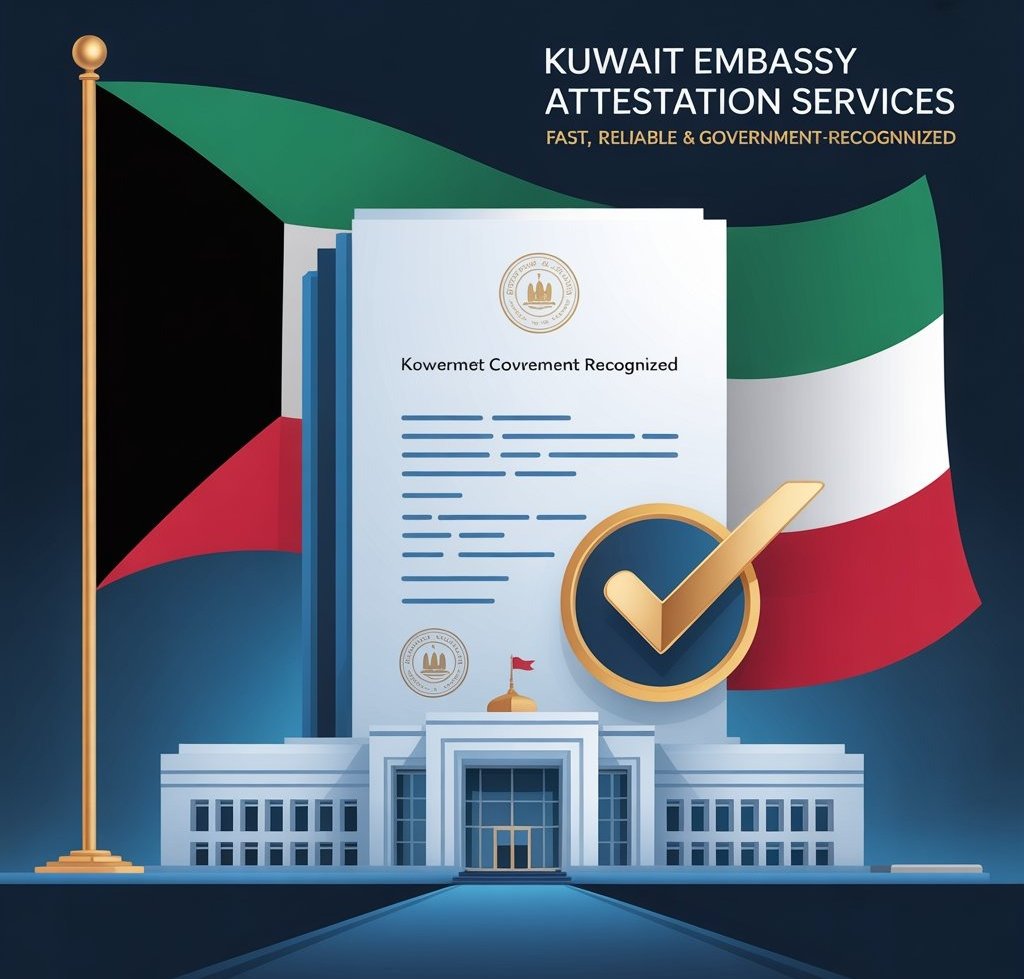
Embassy attestation is a procedure through which official documents are verified and certified by a diplomatic mission, ensuring their authenticity. This process is particularly crucial for individuals traveling to or residing in Kuwait, as the Kuwaiti government requires specific documentation to be attested to accept it as valid. Without this certification, important documents such as educational certificates, marriage licenses, and personal identification may not be recognized, potentially leading to various complications during immigration or legal proceedings.
The significance of embassy attestation lies in its ability to confirm that the documents being presented are genuine and compliant with local standards. In practice, this means that the embassy performs a meticulous check of the document's origin, the authenticity of signatures, and the seals from the issuing authority. This verification reassures Kuwaiti authorities that the presented documents have been properly authenticated and adhere to legal requirements.
Documents Required for Attestation
Attestation by the Kuwait Embassy in India is an essential process for individuals seeking to validate their documents for use in Kuwait. A variety of personal, educational, and legal documents require attestation, each serving a different purpose necessitating formal verification.
Firstly, personal documents play a crucial role in the attestation process. These typically include identification papers such as passports, which help verify the individual's identity, and birth certificates that confirm the individual's date of birth and lineage. Both documents should be original and may require copies for submission alongside the attestation application.
Furthermore, educational certificates are another significant category that requires attestation. This includes diplomas, degrees, and transcripts. These documents are usually necessary for employment, further education, or professional registration in Kuwait. Individuals must ensure that their educational documents are issued by recognized institutions and are notarized before submission for attestation.
Additionally, legal documents such as marriage certificates or divorce decrees may also require attestation. Such documents are often needed in cases involving family reunification or legal proceedings in Kuwait. It is essential to ensure that all legal paperwork is complete, accurate, and duly signed before seeking attestation at the embassy.
Each of these document types serves a specific function and must be prepared meticulously to avoid delays in the attestation process. It is advisable for individuals to compile a clear checklist of the required documents to ensure they have everything in order before visiting the Kuwait Embassy. Thorough preparation will facilitate a smoother and more efficient attestation process.
Steps Involved in the Attestation Process
The attestation process for documents destined for Kuwait through the embassy in India comprises several crucial steps designed to ensure authenticity and compliance with legal requirements. Understanding each of these steps is essential to streamline the process and avoid potential delays.
Firstly, the procedure begins with obtaining an initial verification of documents from the relevant authorities in India. This might involve specific educational certificates, marriage certificates, or other official documents that require attestation. The appropriate authority, which could include the Ministry of External Affairs or the issuing educational institution, must verify these documents to confirm their legitimacy.
Next, once the documents have been verified, the applicant must gather all necessary documents and information required for submission. This may include the original documents, copies of passports, and any forms specified by the Kuwait Embassy. It is essential to review the specific requirements of the embassy, as they may have additional stipulations beyond the initial verification.
Once everything is in order, the next step is to physically submit the documents to the Kuwait Embassy in India. Applicants may opt to go through a registered agent for facilitating this process, as it can sometimes help in expediting the submission and retrieval of documents. It is crucial to note the processing time indicated by the embassy, as this will vary depending on the type of documents being attested.
Finally, after processing, the documents will be returned to the applicant, either directly or through the registered agent. This completes the attestation process, confirming that the documents are ready for use in Kuwait. Adhering to this systematic approach is instrumental in ensuring a smooth and efficient attestation experience.
Processing Time and Fees
The attestation process for documents at the Kuwait Embassy in India typically requires a carefully coordinated effort that can vary in duration. On average, the processing time for Kuwait embassy attestation ranges from 5 to 15 working days. However, several factors can influence this timeframe, such as the type of document being attested, the volume of applications being processed at the embassy, and whether any additional verification is required. It is advisable for applicants to manage their expectations and plan ahead, as delays can occur during peak times or due to unforeseen circumstances.
Regarding fees, the cost associated with the Kuwait embassy attestation process can also vary depending on the type of document and processing speed required. Standard fees for attestation typically range from INR 1,000 to INR 5,000 per document. For those needing expedited services, additional fees may apply, which can significantly increase the total cost. It is recommended to consult the official embassy website or the service providers for current fee structures and any possible changes that might affect the overall cost.
In some cases, applicants may also incur additional costs for document verification or translation services, especially if the original documents are not in English or Arabic. Moreover, hiring a third-party service for handling the attestation can entail extra charges that should be factored into the overall budget. It is crucial for applicants to consider these variables when planning for Kuwait embassy attestation in India, ensuring they account for both the processing time and associated fees accurately.
Common Challenges and How to Overcome Them
When navigating the Kuwait Embassy attestation process in India, individuals may encounter several challenges that can lead to delays or rejections of their documents. Understanding these common obstacles is essential for ensuring a smooth experience. One frequently faced challenge is the completion of the required documents. Often, applicants may mistakenly submit incomplete or incorrect paperwork, which can significantly prolong the attestation process. To mitigate this risk, it is advisable to meticulously review the specific requirements outlined by the Kuwait Embassy, ensuring that all documents are accounted for and accurately filled out before submission.
Another common hurdle is the lack of awareness regarding the correct sequence of attestation. Many individuals underestimate the importance of having their documents authenticated by local authorities before approaching the embassy. This preliminary step is crucial, as any oversight at this stage can lead to further complications. Applicants should familiarize themselves with the hierarchy of requirements, including certification from the Ministry of External Affairs (MEA) and any state-specific demands.
Additionally, time constraints often pose significant challenges. The attestation process can be time-consuming, and individuals might find themselves in a situation where they need to expedite their documents under strict deadlines. In such cases, utilizing professional services that specialize in document attestation can be highly beneficial. These experts possess the knowledge and experience to navigate the complex requirements efficiently, reducing the chances of error and expediting the process.
Finally, miscommunication with the embassy staff can lead to misunderstandings and, consequently, delays. To overcome this, it is advisable to maintain clear and direct communication with embassy representatives, ensuring that all queries are addressed promptly. By being proactive and informed, applicants can minimize potential pitfalls associated with the Kuwait Embassy attestation process in India.
Post-Attestation: Next Steps
After successfully obtaining the necessary attestation from the Kuwait Embassy in India, it is crucial to understand the next steps in utilizing these documents effectively. The attestation serves as validation for various documents such as educational certificates, marriage licenses, and professional qualifications, which are essential for legal procedures and official processes in Kuwait.
Initially, ensure that all attested documents are safely stored and organized, as they will be required for various applications once you arrive in Kuwait. It is advisable to make several photocopies of these documents, as multiple agencies may request them throughout your stay. Having both the original and the copies readily available will facilitate smoother administrative processes.
Upon arrival in Kuwait, you may need to present the attested documents to local authorities. The primary uses of these documents include visa applications, job onboarding procedures, and obtaining residency permits. Make sure to check with your employer or any relevant authority regarding specific document requirements, as these may vary based on individual circumstances or employment sectors.
In addition, it is important to familiarize yourself with any additional paperwork that may be required in Kuwait. For instance, opening a bank account or signing a lease agreement often requires proof of identification along with the attested documents. Additionally, consider verifying if there are any specific requirements for obtaining a driver’s license or enrolling children in school, as these may also necessitate your attested paperwork.
Moreover, understanding local regulations around document translation can be beneficial. While your attested documents may be sufficient, some institutions might require them to be translated into Arabic, so it is prudent to prepare for such translations beforehand. Planning ahead will undoubtedly streamline your transition into Kuwaiti society.
Conclusion and Additional Resources
In conclusion, the importance of document attestation cannot be overstated, particularly for individuals seeking to validate their documents via the Kuwait Embassy in India. Proper attestation is essential not only for ensuring that your documents are accepted by Kuwaiti authorities but also for facilitating a smooth transition during your relocation or travel plans. Throughout this guide, we have highlighted the detailed steps involved in the attestation process, from collecting the necessary documents to submitting them at the embassy. Moreover, we discussed the potential challenges you may encounter and provided practical tips for avoiding common pitfalls.
For those in need of further assistance regarding the Kuwait Embassy attestation process, a variety of resources are available. It is advisable to stay informed about any specific requirements set forth by the embassy, as these can change over time. The official Kuwait Embassy website serves as an invaluable resource, providing current information about the documentary requirements, processing times, and contact details. In addition to the embassy's website, numerous attestation service providers can offer guidance and support throughout the process, ensuring that your documents meet all necessary criteria.
Moreover, individuals can consult the Ministry of External Affairs in India, which provides pertinent information regarding the attestation of documents. This can be especially helpful when needing guidance on the state-level attestation procedures before approaching the embassy. Professional services can further alleviate the complexities of this process, allowing you to focus on your upcoming plans without the added stress of navigating bureaucratic requirements.
By utilizing the information and resources outlined above, you can effectively navigate the Kuwait Embassy attestation process, ensuring that your documents are recognized and accepted for your intended purposes.
Attestation
Expert services for document attestation in Kuwait.
Documents
Kuwait
+91 92107 76391
© 2025. All rights reserved.