Kuwait Embassy Attestation for India: What to Know
Discover everything you need to know about Kuwait embassy attestation for India. Learn how to apply for attestation, including the essential documents required for a smooth process.
11/18/20257 min read
Introduction to Kuwait Embassy Attestation
Kuwait Embassy attestation serves as a critical process for Indian citizens seeking to ensure the legitimacy and authenticity of their documents when interacting with authorities in Kuwait. This procedure entails the verification of documents by the Kuwait Embassy, affirming that they are genuine and acceptable under Kuwaiti law. Attestation is particularly significant when Indian nationals wish to work, live, or conduct business in Kuwait, as it aids in ensuring the seamless acceptance of their documents by various Kuwaiti institutions.
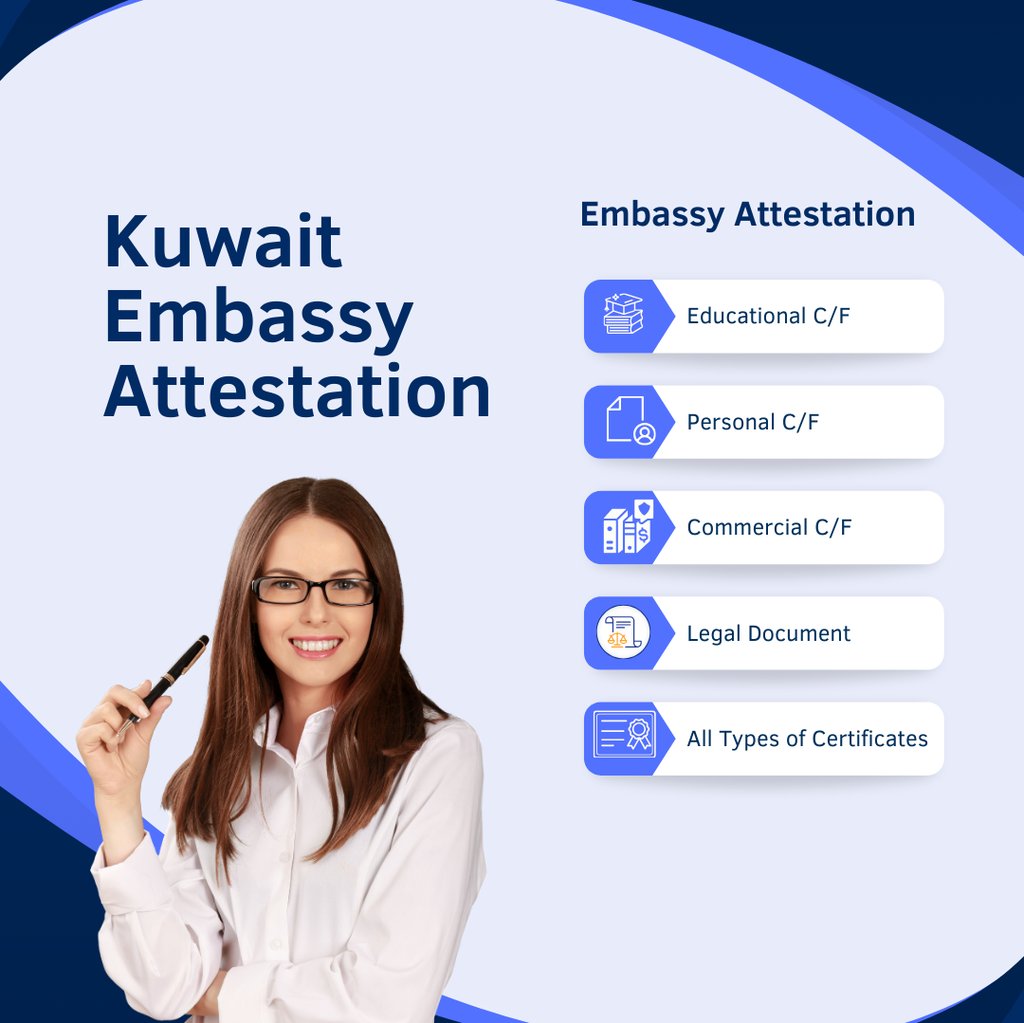
The attestation process begins with the verification of documents by the relevant authorities in India, such as the Ministry of External Affairs (MEA) or State Governments, followed by the Kuwait Embassy’s authentication. This two-tiered validation ensures that both the origin and content of the documents are certified. Commonly required documents for attestation include educational certificates, marriage certificates, birth certificates, and commercial documents, each of which serves different purposes in legal dealings within Kuwait.
Understanding the significance of Kuwait Embassy attestation is vital for Indian citizens, as improper or absence of attestation can potentially lead to challenges in visa processing, employment approvals, or other legal matters in Kuwait. Moreover, the attestation process not only adds a layer of trustworthiness to the documents but also aligns them with the legal frameworks of Kuwait, which is imperative for any formal undertaking in the country.
In essence, Kuwait Embassy attestation is more than just a bureaucratic requirement; it is an essential step for Indian expatriates to establish their credibility and ensure compliance with local laws, facilitating their endeavors in Kuwait.
Importance of Attestation for Indians in Kuwait
For Indians residing in or moving to Kuwait, document attestation holds significant importance as it facilitates legal recognition of their documents. This process simplifies various administrative tasks, from employment verification to educational enrollment. When an individual applies for a job or education in Kuwait, employers and institutions often require validated documents, such as educational certificates, marriage certificates, and even birth certificates, to ensure authenticity. Without proper attestation, these documents may not be recognized, potentially hindering job opportunities or educational prospects.
Moreover, attestation serves as proof that the credentials are legitimate and meets the local regulations of Kuwait. It is essential for Indians, especially those seeking employment, as many companies in Kuwait mandate this requirement to eliminate any risk of forgery or misrepresentation. The attested documents assure the employers of the employee’s qualifications and personal details, which is particularly vital in a competitive job market.
In addition to employment opportunities, attestation is critical for those pursuing higher education. Institutions in Kuwait may request attested educational documents to validate the applicant’s previous qualifications. A lack of attestation could lead to rejection during the admission process, thus impeding the educational advancement of many Indians looking to study abroad.
Furthermore, document attestation is necessary for various administrative mechanisms within Kuwait, such as obtaining residency permits, opening bank accounts, or even registering for local services. The attestation validates an individual's identity and qualifications, thereby streamlining these often complex processes. Overall, ensuring that documents are properly attested is a crucial step for Indians in Kuwait, enabling them to engage seamlessly in both personal and professional pursuits within the country.
Documents Required for Attestation
When applying for Kuwait Embassy attestation in India, it is crucial for applicants to gather all necessary documents to ensure a smooth process. The documentation required may vary depending on the specific type of attestation, but generally, the following categories of documents are needed.
Firstly, personal identification documents play a vital role in the attestation process. Applicants must present a valid passport, which should include a minimum validity of six months from the date of application. Additionally, a recent passport-sized photograph is typically required, adhering to specific dimensions set by the embassy.
Alongside personal identification, educational certificates are essential for individuals seeking attestation for academic purposes. The list encompasses documents such as degrees, diplomas, and transcripts. It is important that these certificates are attested by the relevant educational authorities in India before submission to the embassy. Furthermore, applicants should ensure that their documents are issued in the original format and are notarized if necessary.
For professional or employment-related attestations, employment letters, experience certificates, and additional credentials that validate professional qualifications are required. These documents must also be attested by the employer and duly notarized. In cases where the individual is married, the marriage certificate may additionally be required, especially if it is pertinent to the reason for attestation.
It is advisable to check the Kuwait Embassy's guidelines for any specific requirements or changes regarding documents that may arise. Ensuring all documents are appropriately formatted, notarized, and verified can significantly expedite the attestation process in Kuwait. Preparing the correct paperwork not only streamlines your application but also increases the likelihood of a successful attestation outcome.
Step-by-Step Process of Attestation
The attestation process at the Kuwait Embassy for documents intended for India involves several steps that should be followed carefully to ensure a smooth experience. The first step is to prepare all the required documents meticulously. This generally includes the original document that needs attestation, copies of the document, and identification proof of the applicant such as a passport or residency evidence. It is crucial to verify whether additional documents are necessary for specific types of attestation.
Next, the applicant must visit the relevant authority to obtain an initial seal or signature. For instance, educational certificates typically require endorsement from the Ministry of Education or a similar government body. After obtaining this validation, the documents can be moved to the Kuwait Embassy for the final attestation. It's advisable to contact the embassy or consult their official website to understand the specific requirements and fees for attestation.
Upon gathering all necessary approvals, the applicant can submit the documents to the Kuwait Embassy. Make sure to provide all the required information accurately to avoid any delays. Along with the documents, payment of the necessary fees is also required at the time of submission. After submission, it is recommended to note the tracking details or receipt provided by the embassy, which will facilitate tracking the progress of the attestation application.
Typically, processing times may vary. It is best to inquire at the embassy about the expected duration for completion, as it can differ based on various factors such as the volume of applications or the nature of the documents. Following these steps precisely can greatly enhance the chances of a successful attestation without undue delays.
Common Challenges and Solutions
When undertaking the process of Kuwait Embassy attestation for India, applicants often encounter several challenges that can delay or complicate their applications. One of the primary issues faced is the failure to submit the required documents. The attestation process involves a series of legal formalities where an applicant must present original documents, copies, and, in some cases, additional documentation depending on the type of verification needed. To mitigate this challenge, applicants should initiate a comprehensive checklist of required documents. It is advisable to verify this list against the official Kuwait Embassy website or consult with a professional, ensuring all necessary paperwork is prepared and well-organized before initiating the application process.
Another common issue for applicants is experiencing delays in obtaining the attestation. These delays can occur due to extended processing times at various stages, including state verification or embassy confirmation. To address this concern, applicants are encouraged to allow ample time for the entire process, ideally starting it well in advance of any deadlines. Regular follow-ups with the relevant authorities, through email or phone, can also provide updates on the status of an application, thus alleviating some anxiety associated with uncertain timelines.
Discrepancies in documents, such as mismatched names or differing personal information across various documents, can present another significant challenge. Such inconsistencies can lead to processing delays or even rejections. To avoid this, applicants should ensure that all documents are consistent. A careful review before submission is crucial, and if discrepancies are noted, corrections should be addressed promptly. Utilizing professional attestation services can also help navigate these potential pitfalls, as they bring expertise and an understanding of the requirements for Kuwaiti verification.
Fees Involved in Attestation
The fees associated with the attestation process at the Kuwait Embassy for Indian applicants can vary based on several factors, including the type of document being attested and the specific services rendered. Generally, the costs can be broken down into various categories, including standard attestation, urgent or expedited services, and specific document types, such as educational certificates, commercial documents, or personal documents.
As of the most recent data, the standard attestation fee for educational documents, such as degrees and diplomas, typically ranges from 10 to 50 Kuwaiti Dinars (KWD), depending on the level of education and the number of documents. For commercial documents, fees can escalate to 100 KWD or more, especially for those requiring verification from multiple authorities before reaching the Kuwait Embassy. Personal documents like birth or marriage certificates generally have a standard fee of around 20 KWD.
In addition to the basic fees, applicants should also be aware of any supplementary costs that may arise during the attestation process. For instance, there might be an additional charge for express processing if applicants require faster services; this can add an extra 20% to 50% to the total attestation fee. Furthermore, payment methods accepted by the embassy may include cash, credit cards, or bank transfers, which can also incur processing fees depending on the transaction method.
It is imperative for applicants to check the Kuwait Embassy's official website or contact their office for the most accurate and up-to-date fee structure. Keeping track of all potential fees helps in budgeting appropriately for the attestation process, ensuring a smooth and efficient application experience.
Frequently Asked Questions (FAQs)
When navigating the process of Kuwait Embassy attestation for India, prospective applicants often have a multitude of questions. This section addresses some of the most common inquiries regarding the validity of attested documents, expected timeframes, and specific requirements associated with different types of documents.
One prevalent question is regarding the validity of documents that have undergone attestation. Once a document has been attested by the Kuwait Embassy, it is generally recognized as a legally valid document within Kuwait. However, it is crucial for applicants to ensure that the original documents have been verified through the appropriate channels beforehand, such as the home country’s Ministry of External Affairs, to maintain their authenticity.
Another essential inquiry pertains to the timeframe required for the attestation process. While this can vary based on several factors, including the type of document and current processing times, applicants should expect the process to take anywhere from a few days to a couple of weeks. It is advisable to plan accordingly and initiate the attestation as early as possible to accommodate any unforeseen delays.
Furthermore, applicants often ask about additional requirements that may be necessary for specific types of documents. For instance, educational certificates may require extra verification from the respective educational institution before they can be attested. Additionally, commercial documents might necessitate a different set of procedures for attestation, which may include notarization or other forms of authentication depending on the nature of the document.
Understanding these frequently asked questions can help streamline the attestation process and ensure that applicants are adequately prepared. Clarifying these aspects not only alleviates concerns but also fosters confidence in the overall procedure, paving the way for a smoother experience as one undertakes the Kuwait Embassy attestation for India.
Attestation
Expert services for document attestation in Kuwait.
Documents
Kuwait
+91 92107 76391
© 2025. All rights reserved.