Kuwait Embassy Attestation Guide for Visa & Study
Explore our comprehensive guide on Kuwait embassy attestation, covering essential information for visa applications, studying abroad, and securing employment opportunities overseas. Get the insights you need for a smooth process.
9/1/20258 min read
Understanding Embassy Attestation
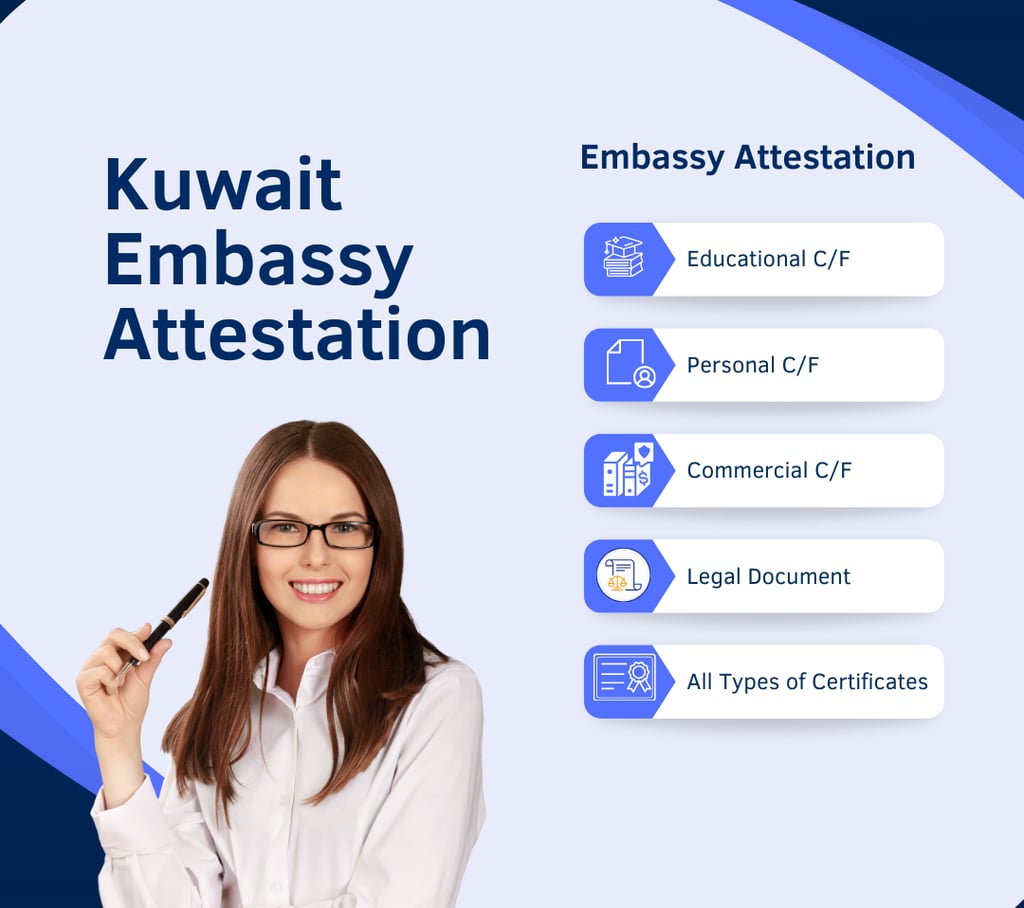
Embassy attestation is a formal verification process in which the authenticity of documents is confirmed by a designated embassy or consulate. This procedure is crucial for individuals planning to travel abroad for various purposes, such as obtaining a visa, pursuing higher education, or seeking employment opportunities in foreign nations. In essence, embassy attestation serves to establish the credibility of important documents, ensuring that they are recognized and accepted by authorities in the host country.
The need for embassy attestation arises from the requirement of foreign governments to verify educational certificates, personal identification documents, and employment records. This validation ensures that the submitted credentials meet the legal and educational standards of the destination country. For instance, a student wishing to enroll in a university abroad may need to present attested educational certificates, while a professional seeking employment might be required to submit validated work experience letters. In both cases, the embassy's confirmation adds a layer of reliability to the documentation, facilitating smoother transactions and acceptance in foreign jurisdictions.
The general process of embassy attestation involves several steps. Initially, the document must undergo verification by relevant home country authorities, such as a notary public or a ministry of external affairs. Once the document is duly verified, it is submitted to the Kuwait Embassy or the respective diplomatic mission for further validation. The embassy then evaluates the documents, ensuring that they adhere to the requisite legal and formal standards. It is essential for applicants to understand that various embassies have their own specific protocols and processing times, which may impact the overall duration of the attestation process.
In conclusion, embassy attestation is an essential step for anyone seeking to travel abroad, ensuring that their documents are properly authenticated and recognized by foreign authorities. The role of the Kuwait Embassy in this process cannot be understated, as it serves as a gateway for individuals looking to validate their credentials for visa applications, educational pursuits, or employment opportunities outside their home country.
Documents Required for Attestation
When seeking attestation from the Kuwait Embassy, it is essential to prepare a specific set of documents that support your visa, study, or employment application. The attestation process serves as a verification of your documents, ensuring that they meet the necessary standards set by the embassy. Below is a comprehensive list of the documents required for attestation.
First and foremost, personal identification documents are crucial. This includes a valid passport, which should have a minimum validity of six months from the intended date of departure. Additionally, you will need to provide passport-sized photographs that meet the embassy's specifications. A national or state-issued identification card may also be necessary to prove your identity.
In terms of educational documents, applicants must submit any relevant certificates and degrees. This typically includes your highest educational qualification—such as a bachelor's, master's, or doctoral degree—along with the accompanying transcripts. It is important that these documents are original copies and are not more than three years old. If your educational documents are issued by institutions outside your home country, they may require further verification from respective authorities.
Other essential documents may include employment letters, experience certificates, and a detailed resume or curriculum vitae, particularly for those applying for jobs abroad. If the purpose of your application is for family reunification or marriage, additional paperwork such as marriage certificates or proof of relationship may be required.
Lastly, ensure that you have any documents that substantiate your purpose of travel, such as admission letters from educational institutions or job offer letters. It is advisable to check the specific requirements of the Kuwait Embassy, as additional paperwork may vary based on individual circumstances and application purposes.
The Attestation Process at the Kuwait Embassy
The attestation process at the Kuwait Embassy is crucial for individuals seeking to study, work, or reside abroad, as it authenticates important documents. To initiate this process, one must begin by preparing the required documents, which typically include educational certificates, marriage certificates, and any other relevant documentation that needs attestation. It is essential to ensure that these documents are original and have been duly verified by the concerned authorities in your home country.
Once the necessary documents are collected, the next step is to submit them to the Kuwait Embassy or the nearest consulate. It is advisable to contact the embassy beforehand to confirm their specific requirements, as these may vary. In general, applicants will need to fill out an attestation application form, which can often be found on the embassy’s official website. Along with the form, applicants must include photocopies of their identification documents, such as a passport or national ID, and any required fees for the attestation service.
Processing times for document attestation at the Kuwait Embassy can vary significantly. Typically, the process may take anywhere from a few days to several weeks, depending on the complexity of the documents and the level of verification required. Therefore, individuals are encouraged to plan accordingly and apply well in advance of their intended travel or relocation date to avoid any unnecessary delays.
As for the fees involved in the attestation service, these can also differ based on the type of document being attested and the embassy's specific fee schedule. It is advisable to check the Kuwait Embassy's website or contact them directly to obtain the most accurate and up-to-date information regarding fees. Understanding the attestation process thoroughly will facilitate a smoother experience, ensuring that all necessary cultural, educational, and professional documentation is properly verified for use abroad.
Common Challenges Faced During Attestation
Embassy attestation is a crucial step for individuals seeking to work, study, or reside abroad, including in Kuwait. However, applicants often encounter several challenges throughout the process that can hinder their progress. Addressing these common hurdles effectively can lead to a smoother attestation experience.
One of the most prevalent issues faced by applicants is incomplete documentation. Each embassy, including the Kuwaiti embassy, has specific requirements regarding the types of documents that need to be attested. Oversights, such as missing signatures, incorrect formats, or incomplete application forms, can complicate the process. To mitigate this challenge, it is essential for applicants to thoroughly review the documentation requirements provided by the embassy. Creating a checklist and verifying all necessary documents before submission can help prevent delays caused by missing information.
Delays in processing are another common challenge during the attestation process. Factors such as high demand, internal processing times, or public holidays can extend the timeline significantly. Applicants are advised to plan ahead and submit their documents well in advance of any deadlines. Establishing a timeline for the attestation process can also aid in managing expectations and ensuring timely completion.
Communication issues with the embassy can further complicate the attestation experience. Language barriers, limited response times, and variations in work practices can lead to misunderstandings and delays. To overcome these challenges, applicants should maintain clear and concise communication. Utilizing email or official channels for inquiries, and being patient while awaiting responses, is often recommended. Connecting with others who have successfully navigated the attestation process can provide additional insights and tips, thereby enhancing preparedness.
Through proactive approaches, individuals can effectively address these challenges, ensuring a more efficient path toward obtaining the necessary embassy attestation for their international endeavors.
Tips for a Smooth Attestation Experience
Undergoing the attestation process can be a daunting task, particularly for individuals preparing for visa applications, studies, or employment abroad. However, there are several best practices that can facilitate a smoother experience. First and foremost, ensure that all documents are meticulously prepared and organized. This includes identifying and gathering all necessary paperwork, such as educational certificates, experience letters, and identity proof. Having an organized checklist can help track these documents effectively.
Furthermore, it is essential to verify that the documents are in the appropriate format or language required by the Kuwait Embassy. Many embassies have specific guidelines regarding the types of documents they accept and may require translations for non-English documents. Prior to submission, individuals should also ensure that documents are duly signed, stamped, and dated where necessary, as this can significantly impact the attestation process.
Once the documents are submitted for attestation, follow-up becomes critical. Applicants should maintain regular communication with the embassy or the attestation service provider to stay updated on the status of their application. This proactive approach not only helps in addressing any potential issues promptly but also reduces anxiety related to waiting periods. Setting reminders for follow-up calls or emails can be beneficial in maintaining ongoing communication.
Moreover, to avoid complications, it is advisable to familiarize oneself with all requirements and guidelines established by the Kuwait Embassy in advance. This includes understanding the processing times, fees, and any specific documentation that may be required for the type of visa or purpose of travel. By preparing thoroughly and staying informed, individuals can ensure a more effective and efficient attestation experience, thereby easing the pathway to achieving their goals abroad.
Impact of Attestation on Visa, Study, and Employment Applications
Having documents attested is a crucial step for individuals seeking visas, pursuing education, or applying for jobs abroad. Attestation is a formal verification process that authenticates the legitimacy of documents required by foreign authorities. This process often involves confirming the authenticity of academic certificates, marriage certificates, and various professional documents, which significantly enhances an applicant's credibility in the eyes of consulates, universities, and employers.
For visa applications, attestation serves as a critical aspect in ensuring compliance with a country’s immigration regulations. Authorities are inclined to trust official documents that have undergone this verification process, often resulting in a smoother visa approval process. In many cases, a lack of proper attestation can lead to delays or even outright rejection of visa applications. This underscores the importance of having all necessary documents authentically attested to increase one’s chances of achieving successful outcomes.
In the context of pursuing studies abroad, academic document attestation plays a vital role. Educational institutions often require proof of academic qualifications before admitting international students. Without proper attestation, students may find it difficult to secure their positions in esteemed institutions. Furthermore, attested documents can help students apply for scholarships and financial aid, enhancing their academic opportunities.
Similarly, when seeking employment internationally, having work experience and educational qualifications attested can greatly boost an applicant’s profile. Employers tend to prefer candidates with verified credentials, as this indicates reliability and authenticity. The process of attestation not only fortifies the applicant’s qualifications but also increases their overall marketability in a competitive job market.
Attestation, therefore, plays a pivotal role across various applications, and ensuring that documents are properly authenticated can lead to improved chances of success in visa acquisition, educational pursuits, and international employment opportunities.
Alternative Solutions for Document Validation
While embassy attestation is a widely recognized method for validating documents necessary for visa applications, study abroad programs, and employment opportunities, there are alternative solutions that may prove beneficial in certain circumstances. These methods can vary based on the country and specific context, potentially offering a more efficient or cost-effective means of document validation.
One prominent alternative is notarization. This process involves a licensed notary public who certifies the authenticity of signatures and documents. Notarization can serve as a preliminary form of validation, ensuring that the document carries more weight when presented to various authorities. Particularly in countries where embassy procedures may be lengthy, notarized documents could expedite certain processes.
Another viable option is obtaining certifications from local or national authorities, such as the Human Resource Development Fund (HRDF) in some regions. The HRDF may issue certificates that validate professional qualifications or training programs, which can be essential for employment applications abroad. Such certifications may be recognized by foreign employers and educational institutions, thus simplifying the need for extensive attestation procedures.
Additionally, some countries rely on alternative forms of verification, such as apostilles, which are used for documents intended for international use. An apostille certifies the authenticity of a document for countries that are part of the Hague Apostille Convention. Similar to notarization, this method is often viewed favorably by foreign entities and can help in establishing credibility without the involvement of an embassy.
It is crucial for individuals to research the validation options available in their specific circumstances, including the requirements set by the target country. Understanding these alternatives can not only save time and effort but also open avenues for easier processing of necessary documentation in the pursuit of educational and professional opportunities abroad.
Attestation
Expert services for document attestation in Kuwait.
Documents
Kuwait
+91 92107 76391
© 2025. All rights reserved.